

Rice paper wrappers have long been loved in Vietnamese and Southeast Asian cooking, especially for fresh rolls and light bites. This recipe gives them a fun dumpling-style twist!
Imagine biting into a delicate wrapper that’s chewy, lightly crisp around the edges, and filled with savory, earthy mushrooms—that’s exactly what you get with Rice Paper Dumplings. 🍄✨
I love how simple yet satisfying these are. Mushrooms bring a rich, meaty texture and plenty of umami, while fresh vegetables and aromatic seasonings keep every bite bright and flavorful.
The rice paper turns beautifully crisp when cooked, creating that irresistible contrast between the golden outside and tender filling inside.
Need a quick lunch, a light dinner, or an appetizer that gets everyone curious? These little dumplings fit the bill and are incredibly easy to customize.
Ready to turn humble rice paper and mushrooms into your new favorite bite? Let’s make some!
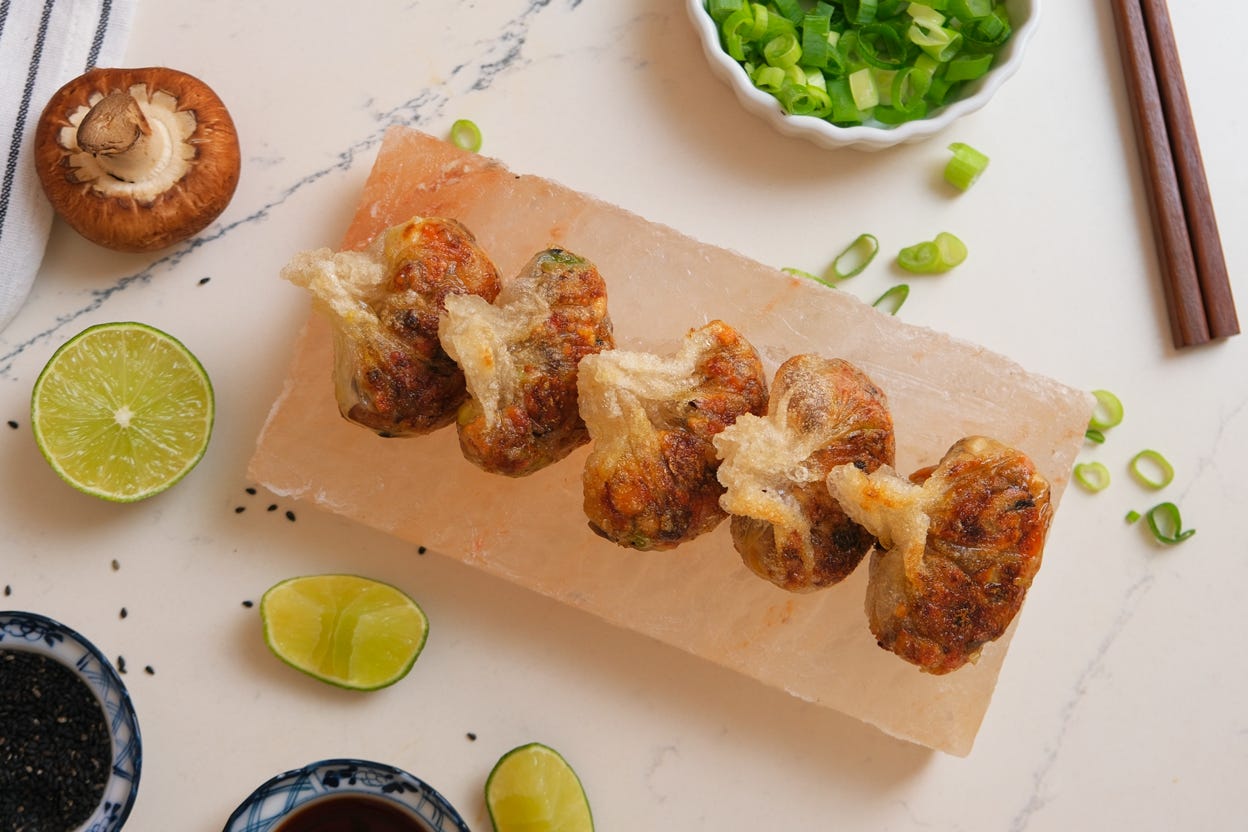
Yield: 12–14 dumplings
Prep Time: 25 minutes
Cook Time: 20 minutes
Total Time: ~45 minutes
Pan Temperature: Medium heat
Ingredients:
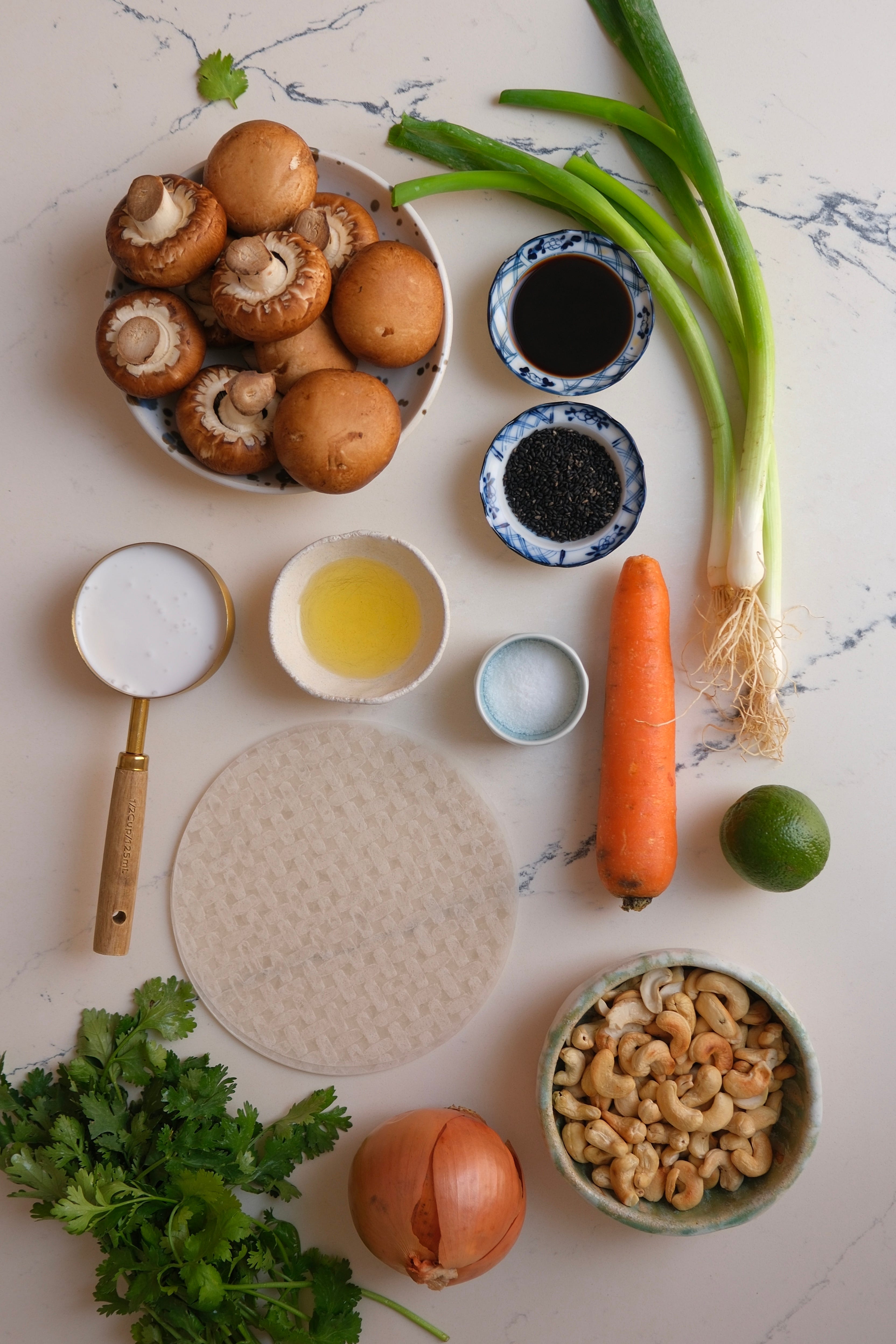
Filling
Champignon mushrooms – 2 cups, chopped
Onion – 1½ medium onions, finely chopped
Carrot – 1 medium, finely chopped or grated
Coconut milk – 1½ cups
Cashews – 100 g, toasted and chopped
Spring onion – 1, finely chopped
Soy sauce – 3 Tbsp
Sesame oil – 2 Tbsp
Sea salt – to taste
Olive oil – for frying
For Assembling
Round rice paper sheets – 12–14 pieces, approximately 14 cm diameter
For Finishing
Black sesame seeds – 2 tsp
Spring onion – extra, for garnish
Fresh cilantro – optional, for garnish
Lime – optional, for serving
Soy sauce – optional, for serving
Instructions:
1. To Make the Filling
Gather the necessary ingredients.
Chop the onion, spring onion, carrot, cashews and mushrooms.
Heat a little olive oil in a pan over medium heat.
Add the chopped onion and carrot.
Season lightly with salt and cook until slightly softened.
Remove the onion and carrot from the pan and set aside.
Add a little more olive oil if needed, then add the chopped mushrooms to the same pan.
Cook the mushrooms separately until they release their moisture and start to brown.
Add the cooked onion and carrot to the mushrooms.
Add the soy sauce and sesame oil.
Pour in the coconut milk and cook for a few more minutes, until the filling becomes slightly creamy and well combined.
Add the chopped spring onion and toasted chopped cashews.
Mix everything together and let the filling cool slightly before assembling.


2. To Shape the Dumplings
Prepare a bowl or shallow tray with water.
Dip one rice paper sheet into the water until it softens.
Place it on a clean work surface.
Add around 1 to 1½ teaspoons of filling to the center.
Fold the rice paper in half to create a dumpling shape.
Press and seal the edges well.
Repeat with the remaining rice paper sheets and filling until you have approximately 12–14 dumplings.
3. To Fry
Heat a thin layer of olive oil in a pan over medium heat.
Place the dumplings in the pan in a single layer.
Fry until lightly golden and crisp on one side.
Turn carefully and cook on the other side until crisp and heated through.
Repeat with the remaining dumplings.
4. To Finish and Serve
Arrange the dumplings on a serving plate.
Sprinkle with black sesame seeds.
Garnish with extra spring onion.
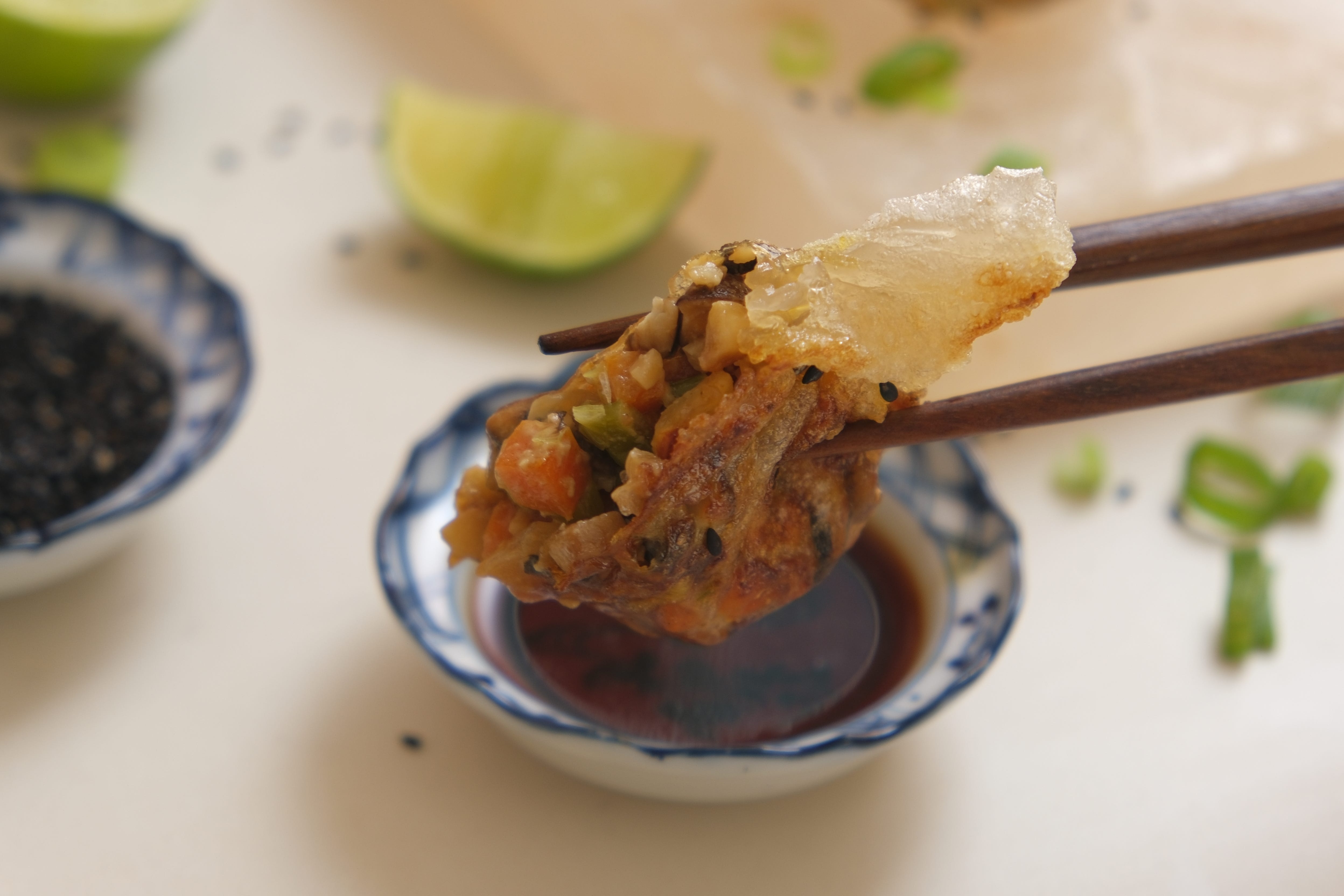
Serve with soy sauce on the side.
Add fresh cilantro and lime if desired.
Dip the dumplings in the soy sauce and enjoy them warm.
If you want more gluten-free recipes, don’t forget to check out :
The NEW gluten-free baking book every baker needs
#1 Amazon Bestseller in 3 categories: Gluten-Free Cooking, Gluten-Free Diets, and Wheat-Free Diet
From real crusty pizza, pillowy soft cinnamon rolls, and glorious layered cakes to chewy bagels, buttery focaccia, and delicate pastries, you can find it all in this book. And it’s all GLUTEN-FREE.
The Ultimate Guide to Gluten-Free Baking includes:
100+ recipes spanning bread, pizza & pasta, cookies & sweets, and savory bakes
Expert techniques and clear explanations of WHY gluten-free ingredients behave the way they do
Companion videos for the trickiest techniques
20+ years of real gluten-free baking experience behind every page
Reader Favorites
A sneak peek of some of the most-requested recipes in the book:
Classic Gluten-Free Pizza Crust & Neapolitan Pizza
Real Focaccia (crispy edges, soft center)
Bagels That Actually Chew Like Bagels
Hokkaido Milk Bread (soft, pillowy, notoriously hard to pull off gluten-free)
Full Pasta Night: Fettuccine, Ravioli, Gnocchi, Lasagna
Gluten-Free Cinnamon Rolls with Coconut Glaze
Ginger Molasses Cookies
Chocolate Cookie Sandwiches
What makes this book different
Most gluten-free cookbooks hand you recipes and hope for the best. This one teaches you how gluten-free ingredients actually behave, so your bread stops turning out dense and your cookies stop falling apart.
As Coach Ellie puts it: “Gluten-free baking isn’t about what you have to leave out, it’s about everything you get to bring back to the table.”
What readers are saying
“As a celiac, this book is a lifesaver. I’m so grateful for this wonderful resource!” - Amazon Customer
“Great book, well written, with in-depth explanations. Good for any cook or baker, whether gluten-free or not. Highly recommended.” - Kathryn Carlson
“This book has been a lifesaver for me. Explains differences in ingredients and amazing, tasty recipes.” - Marie Thompson
“As a Certified Health and Wellness Coach... I have recommended Bloom Cooking cookbooks and products to all my gluten-free clients for several years, and due to the fact I have celiac disease, you will find their cookbooks and products in my personal gluten-free kitchen as well.” - Mary P Cheney, FMCHC
Frequently Asked Questions
What kind of recipes are included in this book? The book is organized into four sections: Cookies & Sweet Treats, Pizza & Pasta, Savory & Snacks, and Bread & Bakery Classics, covering everything from weeknight pizza to holiday bread.
Are all the recipes sweet, or are there savory dishes too? Both. Alongside cookies and desserts, you’ll find a full savory lineup: pizza, focaccia, empanadas, quiche, galettes, and more. Many bread recipes (bagels, naan, dinner rolls) work equally well sweet or savory.
Is the science in the book complicated? Not at all. The explanations are kept simple and practical, just enough to help you understand why a dough behaves the way it does, so you can actually troubleshoot instead of guessing.
I’m new to gluten-free baking. Is this book still for me? Yes. It’s written to take you from total beginner to confident baker, with companion videos for the techniques that are trickiest to learn from photos alone.

This is a gluten free recipe, correct? Why is soy sauce listed instead of Tamari?